Quick Update: Trust

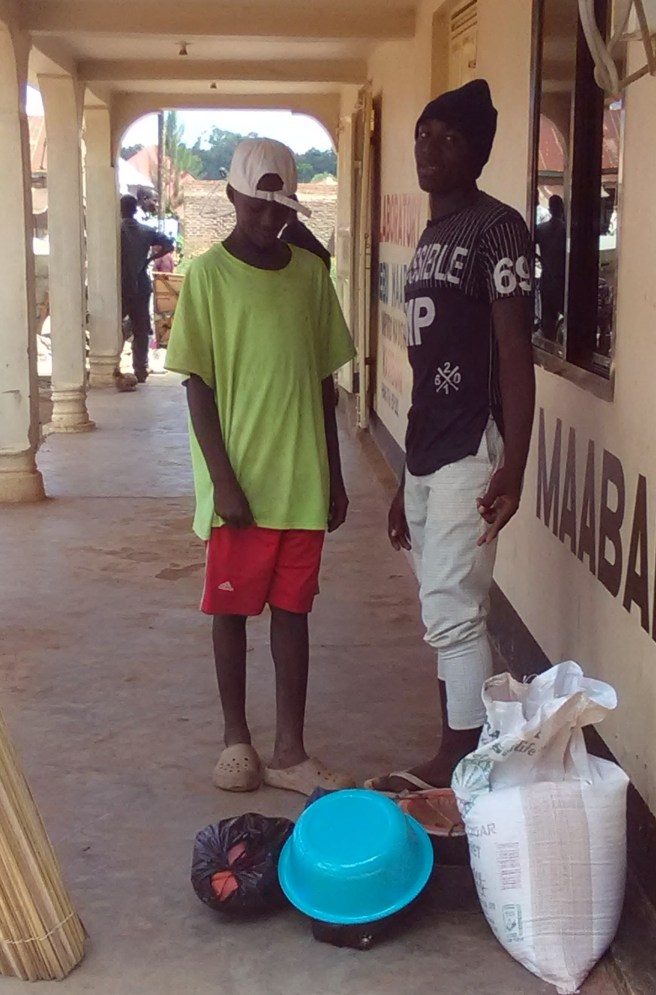
In Tarime, Tanzania, when a rough home situation forces youth to the streets, they normally live by stealing. This makes giving them their own brick business a bold proposition, but that’s our goal. Today was a good day because we reached the point where we could trust the youth with a relatively large sum of money. We entrusted them with roughly $45, and they bought what was needed and returned the rest. Here are Yusufu and Josef, the ones who did the purchasing, together with the things they bought today.

OurFathersHousepurchase

The Best Way to Eat Easter

I (Davis Rhodes, an Our Father’s House volunteer) have a friend here in Tanzania whose mother is a prostitute*. This is the reason he has been living on the streets for years, and missed out on his education, and cannot read. He just finds it too challenging to live with her.

I don’t know how my friend feels about the fact that his mother hasn’t taken better care of him. I just assume that whatever he feels, he’s not real happy about it.

Our brick business has provided him with a job and skills training, and on March 26th, he asked to take out his savings after six days of brick-making. Moses, director of Our Father’s House, asked him what for. “To celebrate Easter”, he said. Normally, Tanzanians celebrate Easter by buying new clothes and shoes, so Moses agreed.

A week or so later I was in Tarime with Mwita, a volunteer who knows these youth better than anyone else does. We ran into my friend, and their conversation went something like,

Mwita: What news of Easter? I heard you travelled.

My friend: Yeah, I travelled.

Mwita: You went to Nyamongo?

My friend: Yeah, I went to my mother.

Mwita: To celebrate Easter together?

My friend: Yeah. On Saturday, I got some white potatoes and cooking bananas at the bus stand and got a car to Nyamongo.

Mwita: O wow! She was happy?

My friend: Yeah, she was happy.

Mwita: So you ate Easter with her? (This is a common Swahili expression, just means “enjoyed Easter…”)

My friend: Yeah, she cooked the potatoes and bananas and we ate Easter together.

Mwita: How long did you stay?

My friend: I returned to Tarime Monday morning.

I was thankful for the brick business, so that my friend could do this for his mother without stealing a phone or scrap metal. I was more thankful, though, for my friend’s heart. After all the trouble that he has had with his mother, he still loves her. It reminded me of another story, one that starts with “In the beginning God created the heavens and the earth…”

* I don’t know his mother’s story, and I’m not wanting to paint her as black-hearted here. It’s an awful fact of life in Tanzania that many (at least 1 out of 50) females find themselves being forced into prostitute-type behavior from a young age.

Naweza

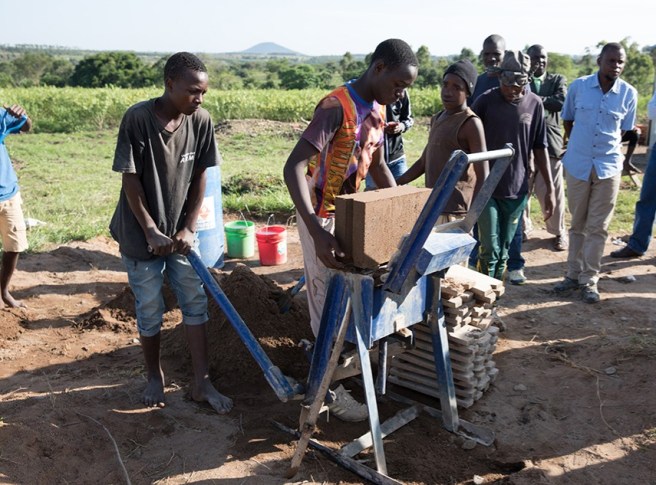
I (Davis Rhodes, and Our Father’s House volunteer) am thankful that the Our Father’s House brick business has given a job to five youth who have a bleak future due to missing out on their education. Our plan, though, is for these youth to supervise and make the everyday decisions of the project, not just to work for it, and this transition will be made by September 1st. This is a long way for these youth to go, so I was delighted by a certain conversation that we had back in March when I was meeting with Mwita (a volunteer who has worked with these youth for years) and Kagose (a professional builder who works with the project).
Tanzania-2-146 - Edited

Davis: So, what if two youth worked each day, as in Sam and Marwa one day, Josef and Yusufu one day, until we finish the last 200 bricks?

Mwita: Aaahhh, yes, that is a good idea. We’ll pay 10,000/day, and we’ll be able to finish the 200 bricks with the last 30,000.

Kagose: Yes, this is a good idea, but one thing; two youth can make 80 bricks in a day if Yusufu is there, but if he isn’t there, it will be difficult.

Davis: Oh, so Yusufu has more strength?

Kagose: Well, he does have more strength, but the main reason they can make more bricks when he is there is because he takes the work more seriously and gets them to stop playing around so much.

Davis: Oh. Well that’s really good news.

Kagose: Yeah, I think what we could do is to have Yusufu and Sam one day, Yusufu and Marwa the next day, and then Yusufu and Josef the third day. That way, we’ll finish the last 200 bricks. They’ll only need to make 40 bricks on the third day.

This plan worked as Kagose predicted, so I suggested that Yusufu take over as site supervisor starting April 1st. Kagose agreed that he should be able to do this, so we asked Yusufu if we could have a quick meeting with him.

As all four of the project leaders pulled up chairs to talk to him, Yusufu tried to look cool as always, but it was clear that he was nervous.

“Yusufu”, I began, “Kagose told me that you put your heart into your work, more than the other youth. When you work hard like this, the other youth also work harder. Kagose also said you get them to take the work seriously. We intend for this project to be in the youth’s hands, so we are going to be giving all of you responsibility little by little. Do you think you will be able to start doing the work of site supervisor on April 1st? Since this is a increase in your responsibility, we will increase your pay. I know this is a lot of responsibility, so how do you see all this?”

Yusufu softly, but confidently, replied, “Naweza” (I am able), and smiled.
 

Never saw myself on the management side…

I (Davis Rhodes, an Our Father’s House volunteer) never saw myself on the management side of a strike. When I came to Tanzania to serve people who are suffering, I thought that I had moved about as far away from that as possible.

But that’s where I found myself on March 10, 2018.

The young men who work for the brick project had shown up for work on the day before, but had decided that the work was too much. They wanted to return to the previous pay scale, where they were paid a flat rate. They had quit working and returned to the streets.

It was a strange feeling to have worked so hard to help these five young men, and then have them complain that we were treating them unfairly. These five folks are just as real as me though, and if all five of them see the world differently from me, then that’s good evidence that I’m missing something.

So I talked to the Tanzanians who are supervising the project, and we decided to listen to the youth. We met in the Church, the youth sitting across from us in plastic chairs, the four of us on wooden benches.

“The work is hard, and the money is small”, they began. Why couldn’t they return to the previous pay scale, instead of being paid per-brick? Could they have gum boots and gloves? And carrying that heavy machine back into the shed each day gets old. Can they save money by cooking for themselves instead of us paying a cook?

Mwita, a volunteer who has worked with these youth since 2012, took the lead in replying. He explained that this project had been started with a grant from a Church, but the project was meant to be a self-sustaining business. They had been paid a flat rate from the grant during the training phase, as they learned how to use the machine. This rate had often been greater than the market value of the bricks they were making. That was fine in the training phase, but now that they have learned make the bricks, we can’t keep doing that, or the business will run at a loss and die.

Mwita also knew that these young men were suspicious that we were going to be making a killing off of them. So he proceeded to show them how much the bricks sold for, and exactly where every shilling was going, so they would see why we cannot afford to increase their pay right now. A couple of us lent our phones so that 2 of the better-educated youth could run the simple calculations themselves.

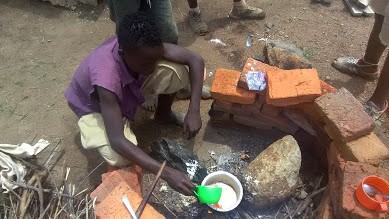
Marwacookingeggs - Edited

We embraced the idea of them cooking for themselves, and showed them how much more they would be making with this change. We also explained to them that their pay would be going up next month, as they learned to supervise themselves and our current supervisor’s paid position became unnecessary.

At the end of the meeting, everyone was happy, including me. I was thankful that we had decided to listen to them and respond to their concerns.

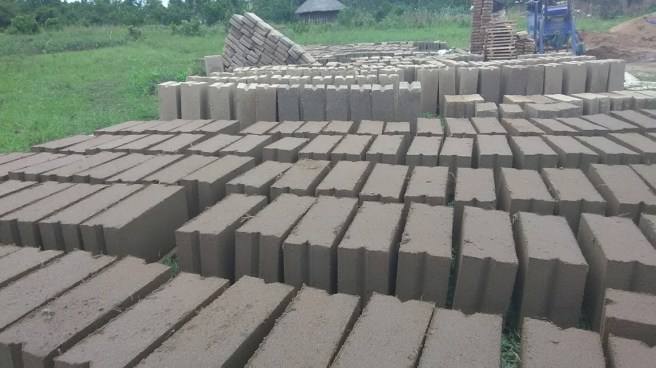
Since then, they have steadily increased from making 120 bricks in a day to 200 in a day. On two of the last three days of work, they worked well without supervision. After the cooking change and the production increase, the money they make in a day has nearly doubled. On Monday the 26th, they were pretty excited to use the money they had saved to buy new clothes, shoes, and food.

lotsofbricks


#Ishirini-in-2018

Hello friends. I hope you have been happy lately.

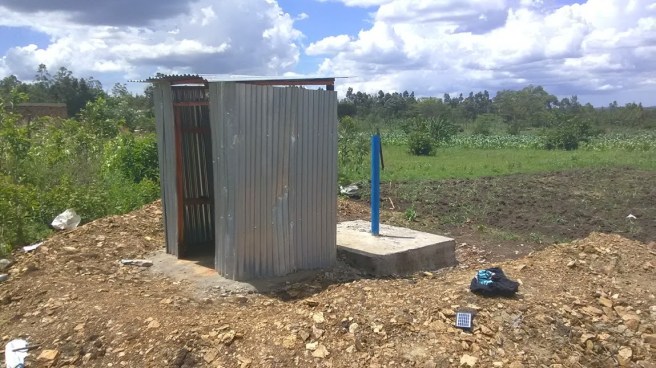
Materially, a lot has happened lately. We dug a 30-foot-deep well. We built a bathroom.

brickprojectchoo

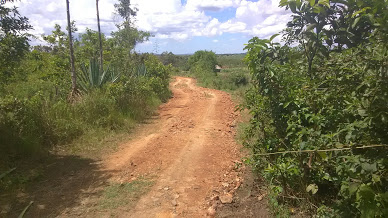
We made an rural, gully-ridden dirt road passable.

brickprojectroad

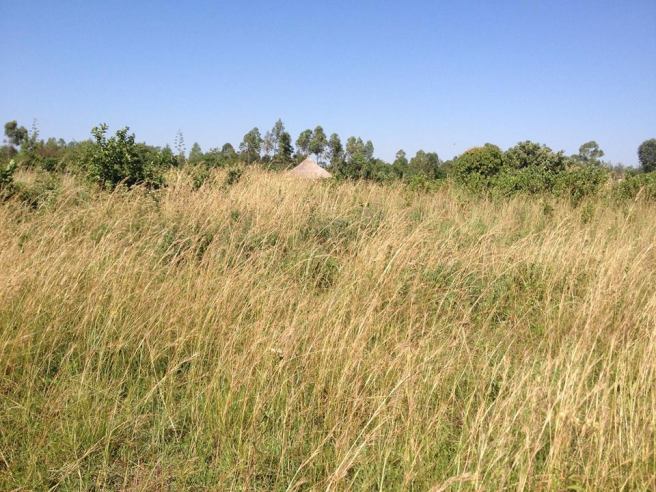
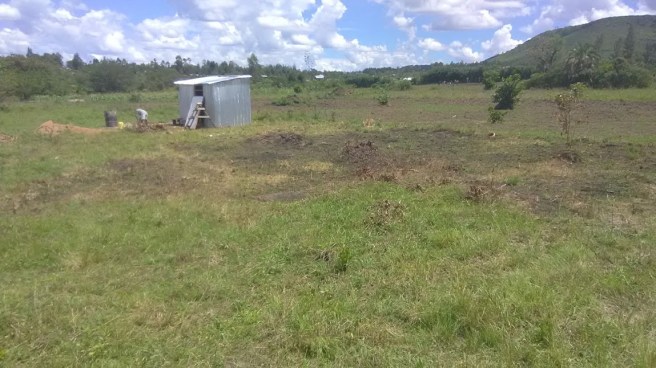
We slashed a bunch of grass and took out 10 or so bushes.

Brickprojectsite
Before
brickprojectsite
After

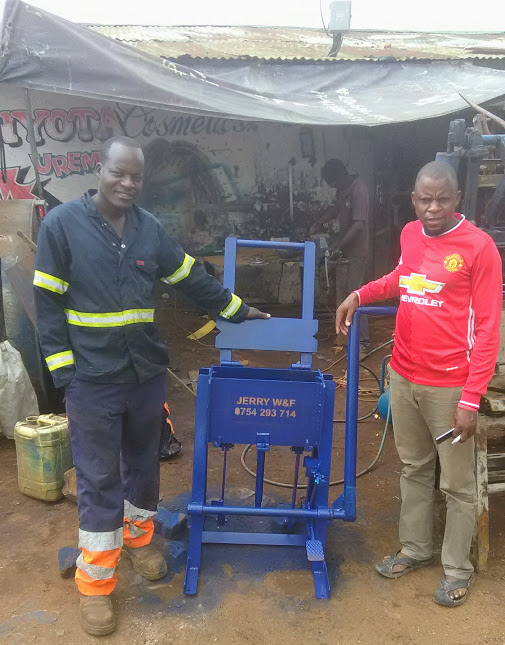
We got a brick machine.

brickmachine

While this has been exciting, it has been important to remember that this is all just preparation for the stuff that really matters. Preparation to make bricks cheaper for Churches in Northern Tanzania. Preparation for giving a job and a skill to some youth who have lived much of their lives on the streets.

The stuff that really matters starts this week, when we train Yusufu, Marwa, and Josef Marwa, Justin Matiko, and Samson on how to use the machine. It starts when they start saving up money and learning a useful skill. It starts when they start to see hope in their future, and a chance to leave the streets.

When I first started to notice children and youth living on the streets, I remember feeling so sad for these folks whose parents had died so early. It never entered my mind that most of them might have living parents and other relatives.

But the majority do.

I live with Mwita, who oversees our efforts to return these children and youth to their families, and he has filled me in on the details on many of their lives. They find themselves on the streets because their father was in jail and their stepmother refused to feed them, or because their mother is a prostitute and is challenging to live with, or because their mother has an undiagnosed mental illness and won’t allow them to live with their father. Parents, step-parents, and grandparents come home drunk, or beat them, or give them a load of household responsibilities that they find excessive.

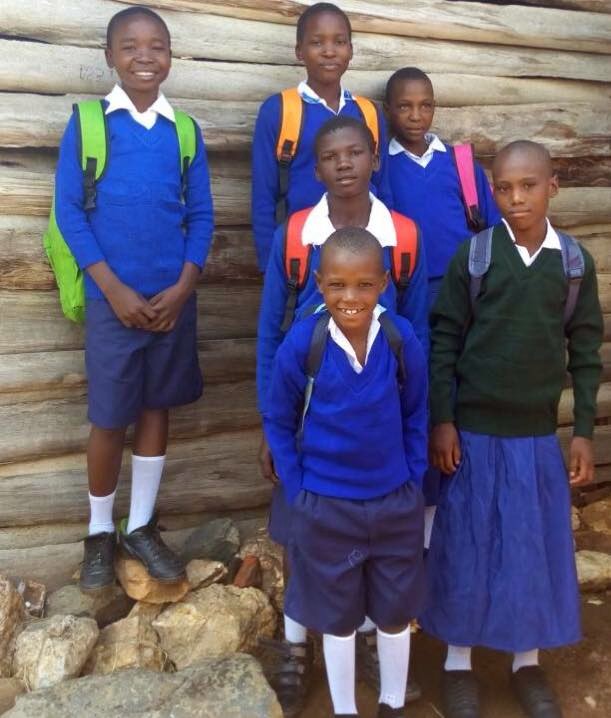
Some of the clearest joy I feel in Tanzania comes when I am walking down a street and run into a young woman or man who used to live on the streets. They smile, are clean-shaven, and have clean clothes or a school uniform on. I feel thankful to the family they are living with, whether it’s their birth family, or a new family that Mwita and the Our Father’s House folks found for them.

OurFathers House - Edited (1)
Giving is what pays for school uniforms for reunited children who are still in fragile family situations

In 2018, we are hoping to sponsor 20 more youth and children through this reunification process (Yes, that unfamiliar word in the title is Swahili for “twenty”). For the next few weeks, we will be sharing some of their stories, in case you are interested in connecting with one of them. Thank you for supporting these youth who will get skills and a job with the brick project, and like our page to stay tuned for their stories: #20in2018.