Reunited with his Father

I (Davis Rhodes, an Our Father’s House volunteer) was walking down one of the streets of Tarime in March of 2018 when I ran across Mathayo* sitting above a drainage ditch wearing filthy clothes and eating sugarcane. I was walking with Mwita, an Our Father’s House volunteer, and we stopped to talk to Mathayo for a few minutes. We didn’t learn much, but Mwita could tell that Mathayo was homeless. Not long after, Mwita introduced him to Moses, the Our Father’s House director. Moses followed up and learned that he was sleeping on the streets, or washing dishes in exchange for a place to sleep for the night. As Moses got to know Mathayo, he learned that Mathayo’s life had been pretty good until his parents split up. Mathayo and his mother had moved to Tarime (over 50 miles from Mathayo’s father), and that arrangement had worked until his mother remarried. The stepfather did not want Mathayo living with them, and Mathayo had found himself with nowhere to live and no way to get back to his father. 
IMG-20181220-WA0000

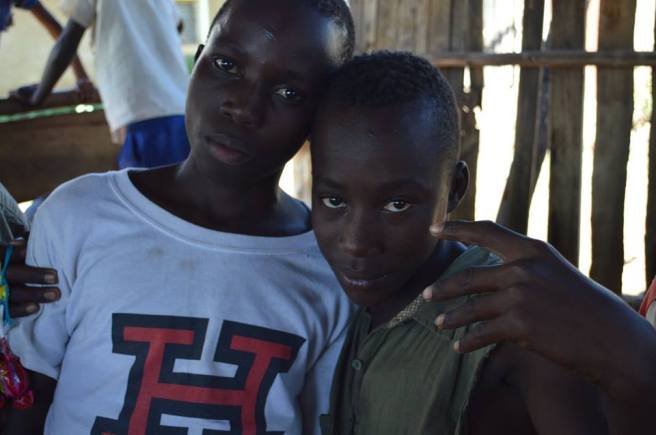
     Once Moses got to know Mathayo well enough, he asked if they could visit his father. Mathayo agreed. The visit went well; the father did want him back and was able to care for him. Not long after, Moses reunited Mathayo with his father permanently, and helped navigate the bureaucracy to get Mathayo into a school in the area. Since then, he has followed up with them twice to make sure that the situation is strong. After visiting Mathayo on this last Thursday (12/20), Moses said,
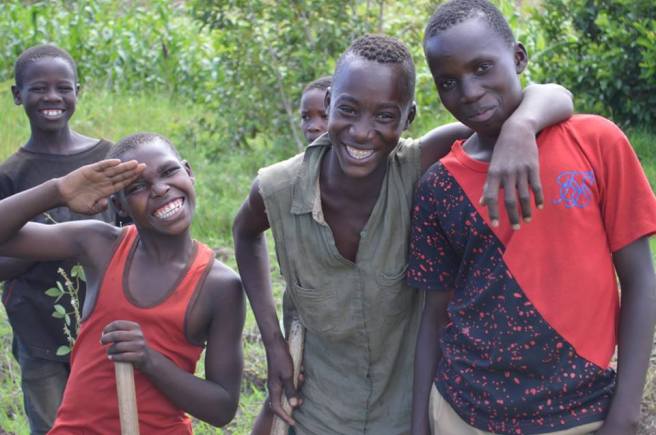
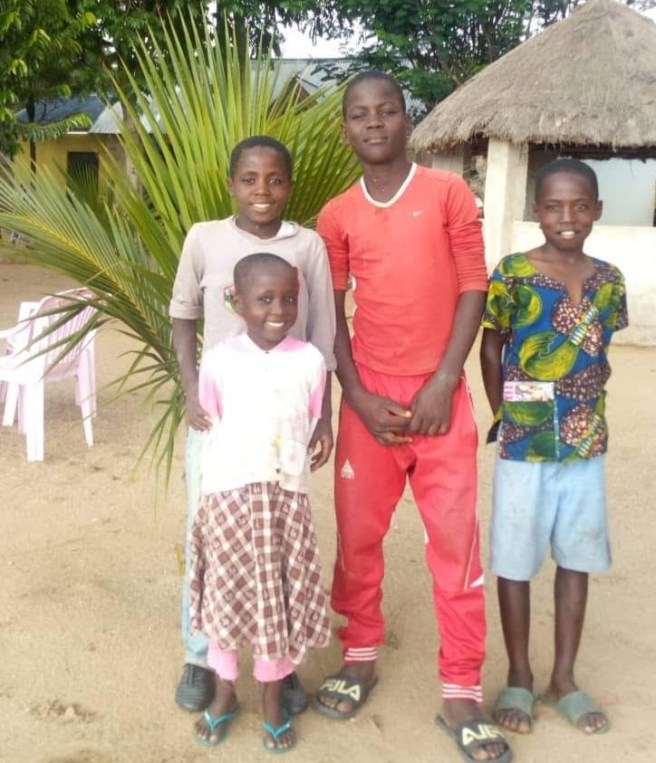
“Today I was with Mathayo at their place and we talked about many things. Here in the picture (below) he is with his friends. He has much happiness and he is doing well with his studies. They did exams and he was place 19 out of 97 students and I am happy to hear and to see how he has put much effort. This young man has returned to school and even though he missed a lot he has done very well.”
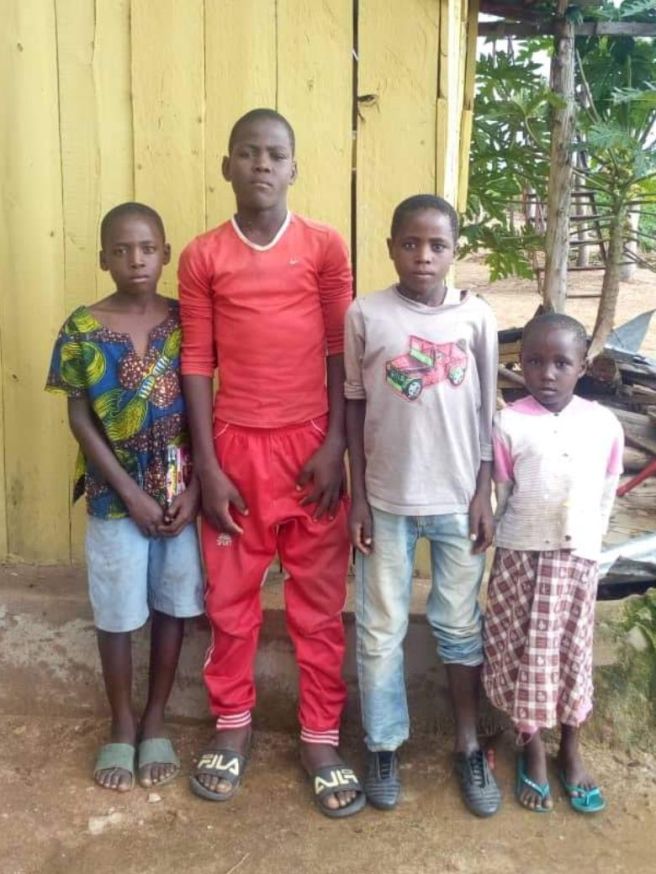
Mathayo

Thank you, friends, for doing so much to help Mathayo. Let’s keep this up in 2019. You can give at: https://secure3.convio.net/gbgm/site/SPageNavigator/gbgm_donate.html?eeetype=1001&project=3022420

Thank you,

Davis Rhodes
Our Father’s House Volunteer

*all child names have been changed
Walking Alongside Them, Every Step of the Way

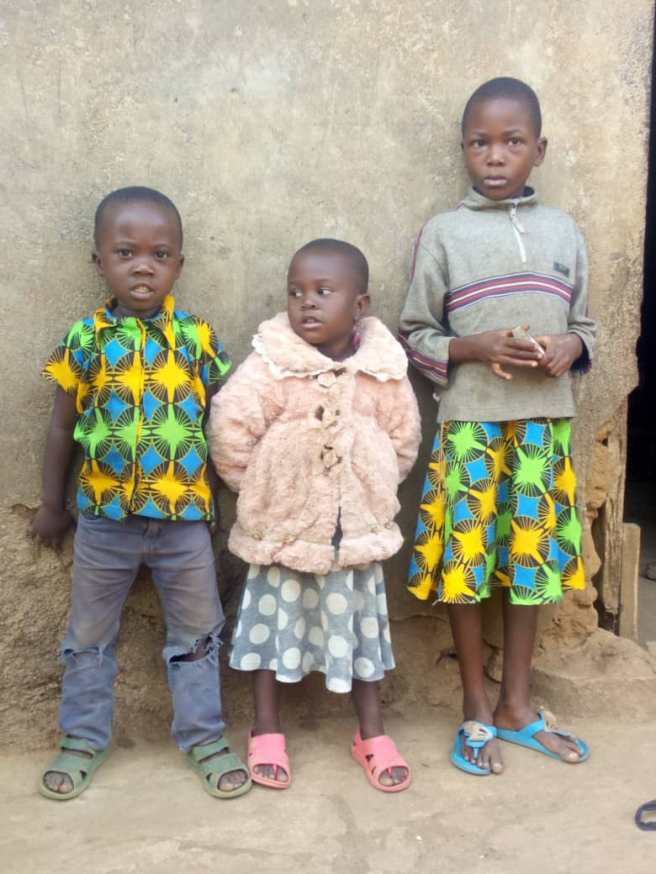
     Gati* and Chacha’s father has a hard time providing for his family, since half of his body is paralyzed. After a few years, his wife left, leaving the family in even worse shape. Gati and Chacha kept eating small meals, skipping meals, and finally dropped out of school because they couldn’t afford the uniforms. After several months of this, they decided to try their luck on the streets.

     Things turned out to be worse on the streets. They didn’t get much more food, but lost the shelter that they had had at home, and had to steal scrap metal in exchange for the little food they got. Forming a habit of stealing at this young age would have set them on this path for their whole lives, which would have led to routine imprisonment.

     They knew that if they returned home their father would beat them badly, as punishment for running away from home. They were stuck.

IMG-20181031-WA0000

     Good news; you donated enough in 2018 to enable us to hire Moses Nyamhanga full-time as the Our Father’s House coordinator. He has been devoting more and more time to his job as a result, and met Gati and Chacha after they had been on the streets for only a few weeks. He earned their trust and got to know their story. Finally, they agreed to let Moses take them back to their father. Moses held a family counseling meeting with the whole family, and explained to their father that he should not beat them for running to the streets. He learned about the challenges that had driven the children to the streets in the first place, and talked with the family about how Our Father’s House could help the family to overcome these challenges and stay together. One concrete action they decided on was that Our Father’s House would provide school uniforms to help Gati and Chacha return to school this coming January.

Thank you, friends, for doing so much to help Gati and Chacha. Let’s keep this up in 2019. You can give at: https://secure3.convio.net/gbgm/site/SPageNavigator/gbgm_donate.html?eeetype=1001&project=3022420

Thank you,

Davis Rhodes
Our Father’s House Volunteer

*all child names have been changed
How to Break a Habit

     We’ve had a hard time helping 15-year-old Gotifrey*. The habit of stealing scrap metal, by which so many homeless youth survive, seemed almost impossible for him to break. The Our Father’s House brick business hired him, but he worked only one day before going back to scrap metal. Returning him to his own family wasn’t an option, as his father had left and his mother had died. Uniting him with a foster family hadn’t worked; no one would accept a boy with a habit of stealing.

     Gotifrey did have an older brother, Rafael. When their mother had died, Rafael had gotten a job burning music. It paid almost nothing, but it kept him off the streets. Things changed one day when Rafael started working for the Our Father’s House brick business. He made a little more money and rented a larger place, so Gotifrey could stay with him. Gotifrey no longer needed to steal as much scrap metal. This gave him a chance to break the habit (photo credit: Shelby Cook).

Gasaya1

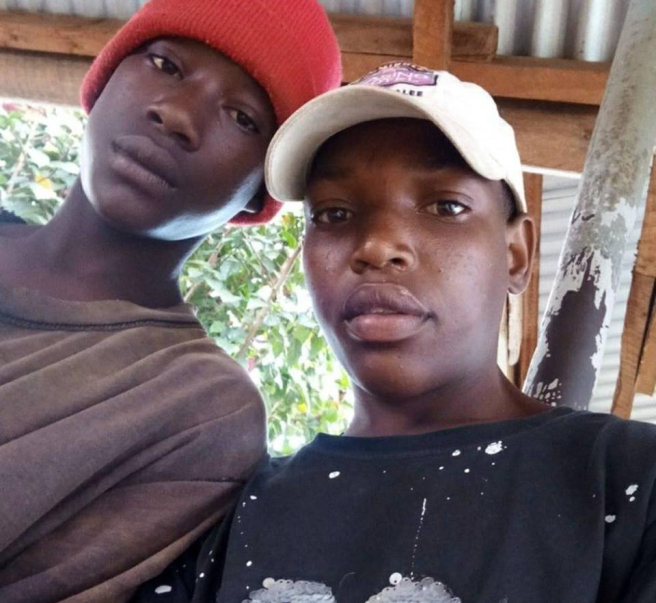
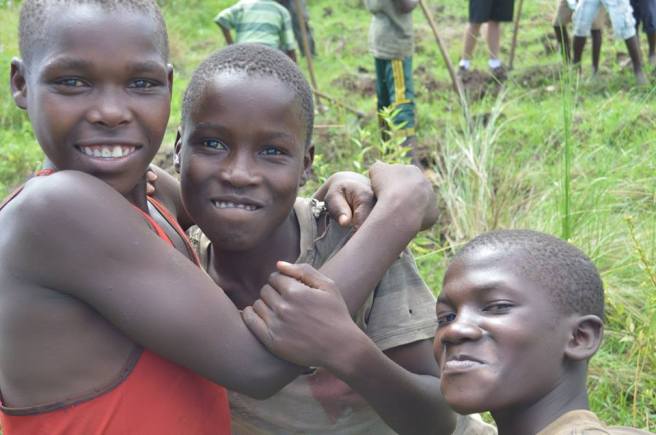
      Around this time (September 2018), Our Father’s House hired Moses Nyamhanga full-time as the new Director. Since Moses could put more time into his work, he got to know Gotifrey better. He could tell Gotifrey wanted to stop stealing, and he knew a family in town who owned a small restaurant. Moses asked Gotifrey if he would like to wash dishes at this restaurant instead of stealing. Gotifrey jumped at the opportunity, and he has been working there ever since. Here he is, hanging out with a couple other homeless youth.

      A year ago, an Our Father’s House volunteer took me (Davis Rhodes, OFH volunteer) around town, after dark, to see the children sleeping on the streets. One of the children we saw was Gotifrey, sleeping under an overhanging roof on a slab of concrete. I remember feeling so frustrated that we couldn’t help him. A year later, he has a place to sleep and has broken his habit of stealing. Thank you, friends, for making this happen.

Kwetu

The Our Father’s House ministry in Tarime, Tanzania reunites children on the streets with families. This may be their own family, through family counseling and fixing the issues that forced them to the streets in the first place. If that won’t work, then they unite the child with a foster family.

This has worked remarkably well. Over the last five years, they’ve reunited over forty children and youth with families.

Unfortunately, there was a group of youth who they have had trouble helping. These young men were older- between thirteen and sixteen- and felt that they were too old to return and live with their family, or to enter into a new family. “Tutaishije nao?”- “How will we live with them?”- they would often say.

The situations were often a bit more complicated. In one case, for example, two brothers had been reunited with their mother. A few years later though, she died, and they returned to the streets. At this point, one was fourteen, and the other sixteen, and they weren’t interested in a new family. In another case, a young man had been united with four different foster families, but each time, he had left after no more than two months.

The discouraged Our Father’s House volunteers would sometimes ask if we could build a house for these older folks to sleep at. We finally decided against it though. Reuniting children with families needs to be our priority, and this house would take a lot of our budget and focus off of the family reunification. Also, a place like that will make running to the streets more attractive for children in difficult homes. Were we really able to handle a huge influx of kids running to the streets? And was this really the best option for them? Finally, a house would need to be maintained for years. Was that really sustainable, given the size of our organization? We decided it wasn’t.

I would often see these older youth hanging out in this run-down lot in the middle of town, and I would know that this was where they were going to sleep, their feet in gunnysacks, doing their best to cover themselves with packing cloth. “What do they do if it rains?”, I once asked an Our Father’s House volunteer. He didn’t have an answer.

MamaBhoke1

Once we started the brick project, we were able to start paying three of these older youth. The first time we paid them, we heard them talking about renting a place to sleep, but we weren’t sure if they had.

A few months later, though, they started to speak more definitely and consistently about “Kwetu”, swahili for, “Our place”.

Me: “Rafi*, where is Saimoni today?”

Rafi: “When I left him, he was still at kwetu, cooking. He’ll be here soon.”

Or we would hear them talking to each other.

Saimoni: “Chacha, where is your shirt? You said I could wear it today.”

Chacha: “You don’t remember? I gave it to you when we were still at kwetu.”

Saimoni: “Stop it, man.”

And we started to hear even better news. We would talk with some of these older youth who weren’t working with the brick project, and we would learn that those who had paid to rent were allowing others to stay with them. One short conversation I remember very distinctly,

Mwita, an Our Father’s House volunteer: “Where are you sleeping these days?”

Daudi: “Kwetu, the place that Rafi and Saimoni and Chacha rented. I always sleep there.”

I had been pretty disappointed in our inability to help Daudi, but this news made me happy.

Of course, it would have been better if these children were still with their birth families. It would have been better if we could have reunited them with families. But given the facts that both of those were no longer options and that these young men had remained on the streets, we are pretty thankful to have finally helped them to find a safe place to sleep.

In these pictures are four of the five youth who are staying here.

19748869_10207447946155948_7420823306457025157_n

19756390_10207447803312377_8693592725284872815_n

gabrieli-and-josef-e1536331405426

An Even Better Foster Family

Hello friends!
A quick update on one of the Our Father’s House youth. He has been reunited with a family for awhile now, but we are continuing to follow up with him, ensuring that he does not return to the streets.
An Our Father’s House volunteer, named Mwita, went to visit him, and things seem to be going well. He is living with a new foster family. This started with him hanging out at their house, even sleeping there sometimes. Eventually, they asked him if he wanted to live there. They asked the foster mother who he was with, and she agreed.
Mwita said that this is a better situation for him, partially because the new family is wealthier, but more importantly, because they are home more often. His previous foster mother had to work all day selling vegetables in the market, which meant he was left on his own a lot. At this house, the mother stays home, takes care of the children, and runs the store. It’s better for him not be alone so much- sometimes that can lead these youth to return to the streets.

A snippet from their conversation:
Mwita: “Have you had any challenges with him?”
New Foster Mom: “Just the normal challenges of a child. He is not a bad child”
(later)
Mwita: “You know, many children on the streets aren’t orphans. They have many relatives nearby. Even this one, his relatives are here in Tarime.”
New Foster Mom: “Yeah, I even know some of them. I’ve talked to them, they are surprised. ‘That child?’, they say, ‘That child has defects, he is a thief.’ Ever since I’ve been living with him, I haven’t seen any of that. He has the behavior of a normal child. Do you think I would let him help manage my store if he was a thief?”

He did ask Mwita if we could move him to a different school.
It should be possible, and we will get to work on it.

Faruku5
This child, together with some others at Tarime Methodist Church