Annual Report 2018
Introduction:
Our Father’s House believes that every child should have a good home. Therefore, Our Father’s House has the mission of reunifying street children with their families and ensuring that they can live in a safe, stable, and peace filled home.
Our Father’s House, since its inception in 2013, has gone through many different stages under the leadership of Tarime United Methodist Church. However, the growth that has happened in 2018 is some of the most exciting yet. After four years of dedicated leadership from volunteers within the church the organization took a big step towards maturity in hiring a certified social worker. This growth stage has led to more solid and consistent growth, which has in turn meant more stable care for the street children in Tarime as well as the children who had already been returned home.
Our Father’s House remains dedicated to caring for street children, ensuring that they are seen as having sacred worth, and working towards finding safe and stable homes for all of the street children in Tarime, now and in the future.
2018 Accomplishments:
Our Father’s House has improved in many areas which has set a foundation for better service to all street children and families which Our Father’s House is dedicated to helping.
- Our Father’s House improved its process for reuniting children with their families which has resulted in children staying with their families or foster families and has reduced the number of children who return to the street post reunification.
- Our Father’s House hired its first certified Social Worker.
- 11 primary school children, who were formerly street children, are currently enrolled and supported in primary school.
- 2 secondary school students, who were formerly street children, are currently enrolled and supported in secondary school.
- 4 children reunited with families through child and family counseling work. This includes the 1 girl who was living on the streets.
- Training was done for all volunteers in the rights of children, responsibilities of families, and how to do counseling with street children. This has resulted in an increase in healthy relationship building among volunteers and street children as well as volunteers and families.
- Our Father’s House has improved relationships with the district social welfare office and consequently has received more support from the social welfare office than in previous years.
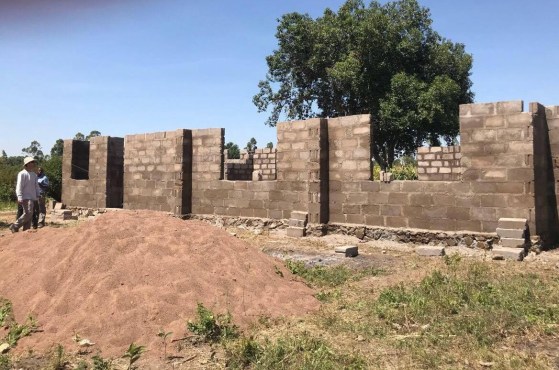
- The brick project, an income generating program which helped older street children learn job skills and work responsibilities, helped empower 6 street children to get off of the street and live independently with a steady income.
Testimonies:
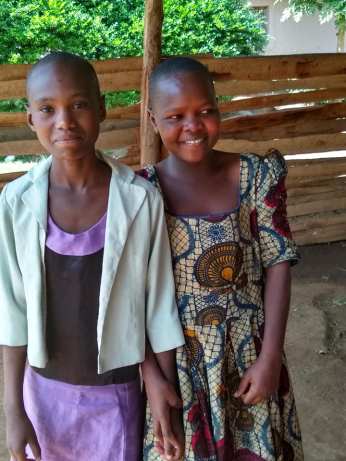
Robi’s* father taught her to steal at a young age, and then kicked her out of the house for the trouble that her stealing caused. We knew that she was very vulnerable on the streets, so we tried over and over to find a new family for her. It was a heart-wrenching thirteen months as she kept being turned out of her foster families after only a few weeks, due to her habit of stealing, but Our Father’s House never gave up on her. We are thankful that she has now been with one family for a year, as of the first week of August, and this steady family situation has given her the stability that she needed to return to school in January. Here she is, playing with another girl at Tarime United Methodist Church.
Lessons Learned in 2018:
As a continually growing and changing organization there is a commitment to not stay at the same place, but instead to continue to grow in all areas of work. The following are the lessons learned in 2018.
- Counseling street children and preparing street children to return home is often difficult because of the influence of others on the street. A transitional home would make this process easier.
- Volunteers are very important for this work and more effort needs to be made at coordinating, training, and supporting the volunteers which work at Our Father’s House.
- All parts of the process, from working with the child to working with the families to working with the local government where the child is from are all important in keeping the child at home once reunited. Therefore more work needs to be done to integrate all of these stakeholders in one streamlined process.
Future Plans:
Our Father’s House recognizes that in many ways the work never ends, but there are still important steps for the organization to take in order to see the assistance offered to street children and their families improve.
In 2019 Our Father’s House would like to…
- Introduce a family strengthening program which would assess the challenges of each family receiving street children and work with them on an individual basis to help reduce the stress of reuniting families or hosting foster children.
- Increase output of the brick making project so that it not only serves to empower older street children, but also becomes a source of sustainability for the organization.
- Build relationships with community members, other churches, and government agencies to do more local fundraising and receive more support from individuals and groups within the community.
In the future Our Father’s House would also like to see a transitional home built which could support street children as they transition back home.
Financial Report:
| Budget Item | Tanzania Shillings | USD |
| Administrative Costs | 1,482,100/= | $681.77 |
| Staff | 4,600,000/= | $2,116 |
| Support for Children Returning to School | 334,500/= | $153.87 |
| Health Care | 360,000/= | $165.60 |
| Saturday Program | 120,000/= | $55.20 |
| Volunteer and Staff Training | 734,000/= | $337.64 |
| Reunification and Follow-up Visits | 352,000/= | $161.92 |
| Total | 8,062,600/= | $3,708.80 |
 Our Father's House